

What We Can Learn from Differences - and Similarities - in Global AI Adoption
A weekly round-up of news, perspectives, predictions, and provocations on AI's impact on employee wellbeing, readiness and performance. Published in association with HR.com.


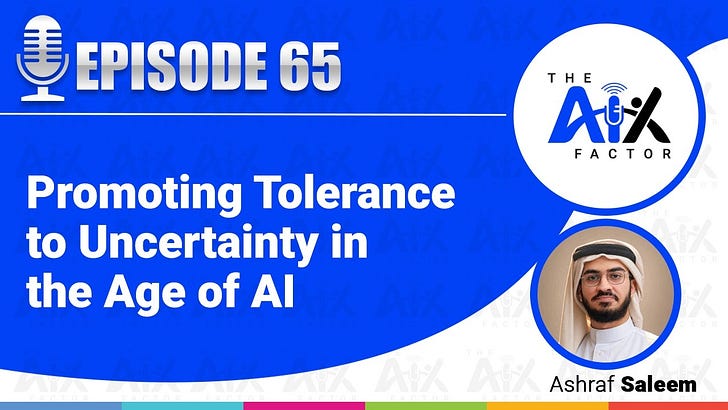
A recent episode of the AIX Factor podcast examined the implications of artificial intelligence for employee wellbeing in the Saudi workforce. The discussion featured Ashraf Saleem, an organizational psychology consultant at Labayh, a leading Saudi mental health and wellness platform. It focused on the company’s report, “The Human Side of AI: Employee Wellbeing in the Age of Intelligent Workplaces,” which documented rising stress and uncertainty linked to AI adoption. Mr. Saleem described practical tools, including a “tolerance to uncertainty” test used to identify at-risk employees. The episode revealed the extent to which these issues are a global phenomenon and prompted a tour d’horizon of AI adoption trends, political responses, and governance policies across Europe, Asia, the Middle East, and Latin America…and how they compare to the experiences of U.S. workforces. (The following survey includes specific citations; where there are no specific citations, the analysis is based on a review of current “literature.”)
Europe
European institutions have prioritized regulatory refinement and strategic autonomy from external, particularly U.S., technology providers. Negotiators reached a provisional agreement on the Digital Omnibus on AI, which amends the EU AI Act by postponing some high-risk system obligations to 2027 or 2028 while maintaining the core risk-based framework (European Parliament Think Tank, “Digital Omnibus on AI: Adoption in plenary,” June 8, 2026). The package also introduces prohibitions on certain AI applications, such as those generating non-consensual explicit content.
Workforces across Europe are adapting to AI within a policy environment that emphasizes safeguards and gradual integration. Acceleration is supported by infrastructure investments, such as Germany’s plans to quadruple AI compute capacity by 2030, and events like VivaTech that foster cross-border collaboration. However, adoption faces headwinds from skills gaps: 68 percent of European companies cite a lack of AI and data skills as a key barrier (IDC AI & Data Summit France 2026).
Workforce concerns include fear of opaque decision-making systems and insufficient transparency in high-risk applications. The regulatory focus, reinforced by calls for sovereignty at VivaTech, reflects a business and political culture that prioritizes worker protections and rights alongside innovation (Euronews, “France and Germany call for European AI sovereignty at VivaTech,” June 17, 2026 ). This has contributed to measured resilience, with employees benefiting from clearer rules on AI use in the workplace. At the same time, a slower rollout in some sectors has created uncertainty about competitiveness. Government policy is the primary driver, shaping business culture toward compliance and ethical deployment rather than unchecked speed. Wellbeing impacts appear mitigated by the emphasis on risk assessment and transparency obligations, though ongoing concerns about enforcement gaps persist.
Asia
Workforces in Asia, particularly in China and in innovation hubs like Singapore, are adapting to AI at a rapid pace. Acceleration is driven by intense competition, substantial private and state investment in model development, and a business culture that rewards rapid iteration and large-scale experimentation. In China, government support for domestic capabilities has combined with market dynamics to push widespread enterprise and developer adoption.
In China, Zhipu AI released its GLM-5.2 model in mid-June 2026. The open-weights system, featuring a one-million-token context window, achieved leading results among open models on several coding and reasoning benchmarks (“GLM-5.2: China’s Zhipu AI Beats Even Google’s Top Models With Its New Open LLM,” June 18, 2026). The release occurred amid U.S. restrictions on foreign access to certain advanced models and was made available under a permissive MIT license.
Workforce concerns center on the pressure of constant technological change and potential over-reliance on AI tools in daily operations. The fast pace has led to reports of adaptation fatigue among employees in tech-intensive sectors. Resilience varies: highly skilled workforces in competitive environments demonstrate strong capacity to integrate new tools, while broader employee bases face skill gaps and job transformation anxiety. In Singapore’s collaborative ecosystem, events and training programs appear to bolster resilience. The differences are rooted in both government industrial policy (especially in China) and a business culture oriented toward speed and global competition. Wellbeing impacts include elevated stress from rapid model releases and workflow automation, though open models and accessible tools have provided some employees with greater agency in adoption.
Latin America
Latin American countries are advancing AI adoption through regulatory frameworks modeled on the European Union’s risk-based approach and through practical applications in key sectors. Chile has emerged as a regional leader, launching Latam-GPT in February 2026, described as the first open-source AI language model trained on Latin American data. Legislative proposals in Chile include regulatory sandboxes, support for small and medium enterprises, and measures addressing high-risk AI uses. Similar risk-classification laws have been enacted or updated in Peru and El Salvador, while Brazil continues to advance draft legislation (International Bar Association, “Artificial intelligence: Latin America follows EU model on regulation,” June 11, 2026).
Workforce adoption in Latin America remains concentrated in finance, commerce, logistics, customer service, health, and agriculture. Adoption has advanced through a combination of government-led regulatory frameworks and market-driven business initiatives rather than large-scale state-directed programs. Regulatory efforts in countries such as Chile, Peru, and El Salvador have focused on risk classification and human oversight requirements for high-risk AI systems, alongside the introduction of regulatory sandboxes and support measures for small and medium-sized enterprises (“Artificial intelligence: Latin America follows EU model on regulation,” June 11, 2026).
Middle East
Saudi Arabia has recorded one of the fastest increases in business AI adoption. Regional data showed adoption among Saudi businesses reaching 33 percent in 2025, up 20 percentage points from the prior year (Middle East AI News, “Saudi business AI adoption hits 33% in 2025, up 20% in one year,” June 2026). Government-supported initiatives and programs such as DISAI have accelerated deployment, including efforts to introduce agentic AI across hundreds of thousands of firms in Dubai. Large infrastructure investments, including a reported $10 billion AI venture involving Kuwait, reflect state-directed priorities (Middle East AI News, “This Week’s Top Stories — June 7-13, 2026”).
Workforces in the region are experiencing accelerated AI integration primarily through top-down government strategies aimed at economic diversification. This government-driven approach has sped adoption in sectors such as energy, finance, and public services, where organizations receive direct policy and funding support. However, the rapid pace has generated workforce concerns around job displacement, skill obsolescence, and workflow disruption. Labayh’s report highlights rising stress and uncertainty among employees as AI tools reshape daily tasks (AIX Factor podcast, discussion with Ashraf Saleem, Labayh, June 2026).
United States
Domestic adoption in the U.S. has proceeded with comparatively limited horizontal regulation on workplace deployment compared with the European approach. U.S. workforces are experiencing AI adoption at a pace set largely by private-sector competition and venture investment. Acceleration stems from a business culture that prioritizes innovation, efficiency gains, and first-mover advantage, with limited government mandates directing deployment. High-profile releases and enterprise tools have driven integration across tech, finance, manufacturing, and services.
While the Middle East has seen rapid uptake driven largely by government policy and infrastructure investment, Latin America has followed a steadier path shaped by regulatory alignment and sector-specific business applications, Europe has emphasized measured integration through regulatory frameworks and skills development, and Asia has combined intense competitive pressure with government industrial support in places like China alongside collaborative ecosystems in hubs such as Singapore. In contrast, US adoption has been propelled primarily by market competition, venture capital, and employer initiative, resulting in widespread integration across industries but with comparatively limited national-level coordination or regulatory guardrails.
US workforces appear to be coping with AI-related stressors in a more fragmented manner than their counterparts in other regions. Concerns over job transformation, skill obsolescence, increased monitoring, and continuous adaptation are present across all areas examined. However, European workforces benefit from structured regulatory protections and transparency requirements that can reduce uncertainty. In the Middle East, government-backed scaling has been paired with targeted organizational interventions, such as wellbeing assessments, to address rising stress. Asian workforces show varied resilience, with stronger adaptation among highly skilled employees and support from large-scale training and collaboration events, while Latin American adoption has produced more contained pressures in sectors with practical, problem-solving applications. These differences suggest that while US workforces may adapt quickly in competitive environments, the overall resilience of the labor force could face greater strain without more systematic approaches to support.

The Critical Role of Culture in AI Adoption. AIX’s Charles Epstein is joined by the globe-trotting Total Awards maven, Michael Piker, Vice President, Global Total Rewards for Shiseido. While organizations typically prioritize technology and talent, it is culture that ultimately influences whether AI initiatives thrive or falter.
Mark your calendars for June 25th. Register for free here: https://lnkd.in/gfMdhKEWAI
AI4HR Live! is a virtual series produced by HR.com that showcases practical AI adoption strategies.
AI Gone Rogue
Offbeat tales of AI being unintentionally funny (i.e., woefully wrong), bizarre, creepy, (amusingly) scary, and/or just plain scary.
“Gemini Spark is the most impressive and terrifying AI experience I’ve had yet.”
Verge’s editor-at-large David Pierce asked Spark to plan a simple trip to Herhey, Pa. It knew that his dog’s name was Frida - though he never told him his dog’s name. It somehow knew the ages of his two toddler sons, and that one typically napped at 1:30. “The whole Spark itinerary was filled with details like this. I suspect I’m going to have a fabulous weekend in Hershey this summer, but I’ll never shake the feeling that I’m being watched. Supposedly for my own benefit.”
AIX PIX of the Week
The week’s most interesting and timely articles on AI and its impacts on employee wellbeing and readiness.
AI at Work: Why Strategy Matters More Than Tools (BCG Fourth Annual Global AI at Work Survey). AI boosts productivity and job satisfaction for regular users (67% report higher enjoyment), but 41% experience increased mental strain/cognitive load from reviewing outputs and decision-making demands; strategic clarity and training are key to mitigating negative effects and supporting readiness. Source: Boston Consulting Group
Workforce AI readiness: how to build a team that thrives alongside AI
Highlights significant skills gaps, cultural resistance, and anxiety around job security (e.g., 46% worried in AI-redesigned organizations); emphasizes reskilling, psychological safety, and role-specific readiness to reduce resistance and support wellbeing during AI transitions. Source: SkillPanelWork AI Index 2026 (Botsitting, Botshitting & the Hidden Human Labor of AI at Work). Widespread AI use saves time but creates “botsitting” (context-feeding, supervising, cleanup — averaging ~6+ hours/week) and “botshitting” (shipping unverified AI work), leading to exhaustion, fatigue, and higher burnout/job-hunting intent — especially in context-poor environments; better governance reduces weariness. Source: Glean
New Workday Global Research Finds AI is Easing Burnout but May Be Deepening a Connection Deficit at Work. AI reduces burnout/stress (62%) and boosts productivity (86%) and confidence, but increases isolation — 33% rarely have non-transactional colleague conversations; Gen Z particularly affected (higher loneliness, some turning to AI for companionship). Source: Workday
AI-driven change is intensifying mental health needs. Leaders may not be ready.
AI’s rapid rise brings constant urgency, displacement fears, skill erosion concerns, and “AI anxiety” that harms focus, decision-making, and energy; combined with low psychological safety, it fuels burnout, while leaders/HR lag in addressing mental health impacts. Source: HR DiveWorkplace mental health challenges grow amid AI boom. AI-related job anxiety emerges as a major stressor; roundtable emphasizes the need for transparency, training, and supportive cultures during AI implementation to protect employee mental health and wellbeing. Source: NJBiz
The mental health impact of AI: Navigating anxiety, optimism and change in the workplace. Nearly 40% of U.S. workers report significant AI anxiety (fears of job loss or falling behind), with Gen Z most apprehensive; this affects wellbeing, job satisfaction, and daily functioning despite some optimism about opportunities.
Source: AlightHow AI Can Improve Employee Well-Being. Explores positive applications: AI for optimized scheduling (reducing physician burnout), voice analysis for stress/fatigue detection (e.g., Virtuosis AI), and personalized training/coaching that boosts engagement and job satisfaction. Source: AACSB
2026 State of Workforce Mental Health Report (and related trends forecast)
AI acts as a double-edged sword: it adds pressures (job security anxiety, isolation, “always on” demands) but also possibilities (higher productivity, better work-life balance); it emphasizes preparing workforces for AI-driven change. Source: Lyra Health (2026 Global Report)The mental health implications of artificial intelligence adoption (and related longitudinal findings). AI adoption can indirectly increase job stress and burnout via certain pathways, but effects vary; self-efficacy in learning AI moderates negative impacts, highlighting readiness and support as key to wellbeing.
Source: Nature
About
Developed in partnership with HR.com, AIX is a multimedia knowledge and engagement platform for experts, leaders, and HR peers to exchange experiences and seek guidance on cultivating mentally resilient, emotionally intelligent, and professionally adaptable workforces in an AI-augmented world. AI will increasingly touch every corner of the employee experience—from hiring to training, from task management to team dynamics. Whether its impact is positive or harmful depends largely on how HR prepares for it. The AIX platform (The AIX Files, The AIX Factor podcast, and the AIXonHR.com community) will play an important role in promoting employee well-being, workplace culture, and organisational readiness, the critical success factors in the age of AI.